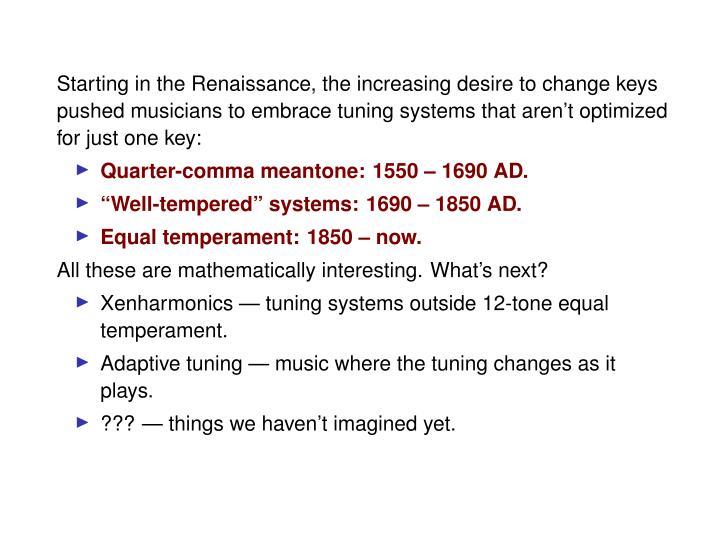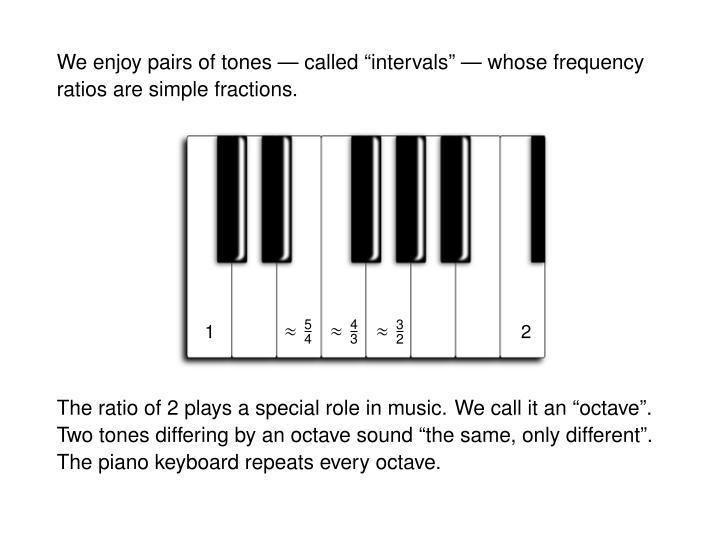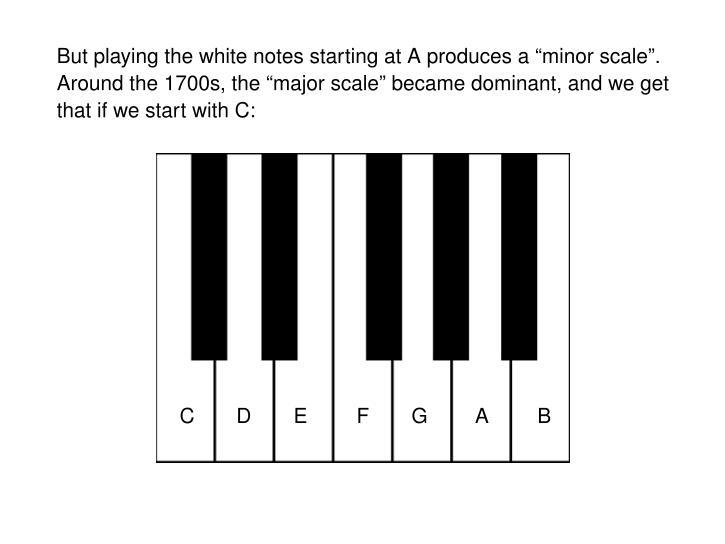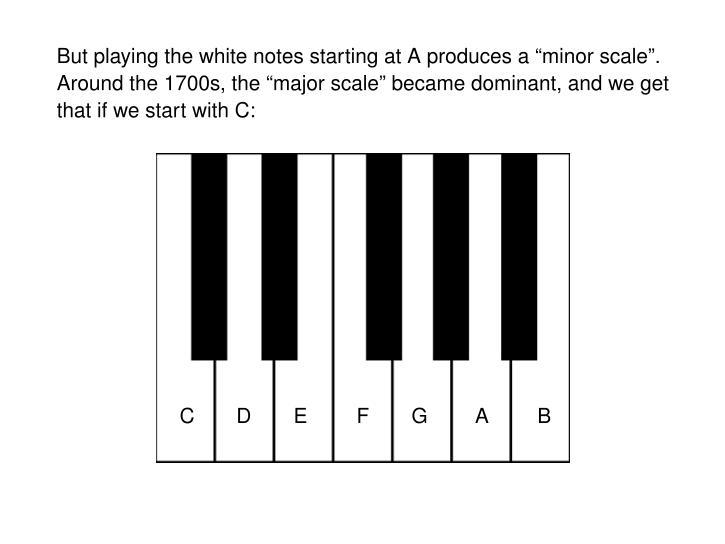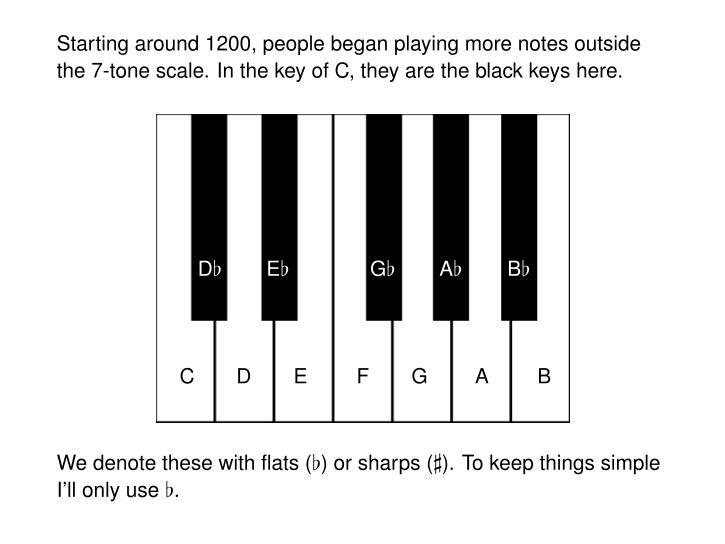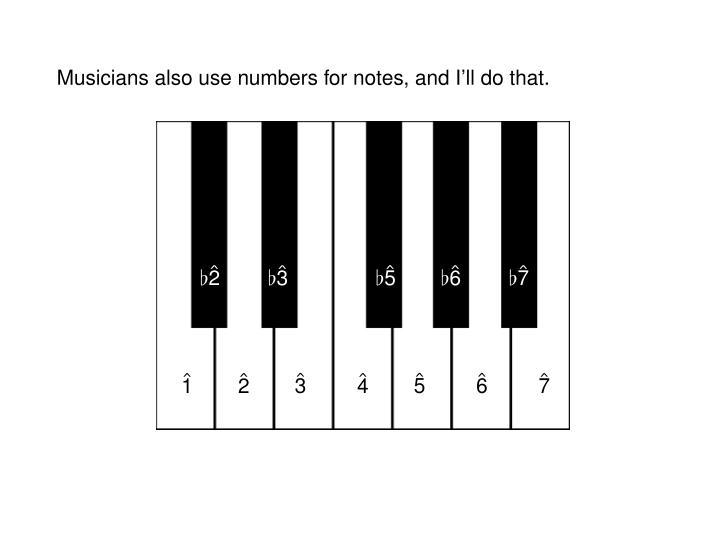
Just intonation is great if you're playing in just one 'key', always ending each passage with the note I've been calling 1. But when people started trying to 'change keys', musicians were pressed into other tuning systems.
This is a long story, which I don't have time to tell right now. If you're curious, read my blog articles about it:
For more on Pythagorean tuning, read this:
https://johncarlosbaez.wordpress.com/2023/10/07/pythagorean-tuning/
For more on just intonation, read this series:
https://johncarlosbaez.wordpress.com/2023/10/30/just-intonation-part-1/
For more on quarter-comma meantone tuning, read this series:
https://johncarlosbaez.wordpress.com/2023/12/13/quarter-comma-meantone-part-1/
For more on well-tempered scales, read this series:
https://johncarlosbaez.wordpress.com/2024/01/11/well-temperaments-part-1/
And for more on equal temperament, read this series:
https://johncarlosbaez.wordpress.com/2023/10/13/perfect-fifths-in-equal-tempered-scales/
It's sad in a way that this historical development winds up with equal temperament: the most *boring* of all the systems, which is equally good, and thus equally bad, in every key. But the history of music is not done, and computers make it vastly easier than ever before to explore tuning systems.
What will come next? It's up to us. I hope next year you explore more of the wonders of music.
(32/n, n = 32)