4 more link(s)
This image features a pair of mallard ducks (Anas platyrhynchos) swimming in calm water. The two ducks show the distinct differences between male and female mallards. 
The duck in the foreground is the female (hen), characterized by her mottled brown and tan plumage, which provides effective camouflage in natural environments. She has an orange and brown bill and a dark line through her eye.
The duck in the background is the male (drake), notable for his striking, iridescent green head and a bright yellow bill. His body is mostly gray, with a chestnut-brown chest and a black rear section. 
Both male and female mallards possess a distinct, white-bordered, purple-blue wing patch called a speculum, which is visible even when they are resting on the water. These birds are a type of "dabbling duck," meaning they feed by tipping their bodies forward to graze on underwater plants and insects rather than fully diving underwater.
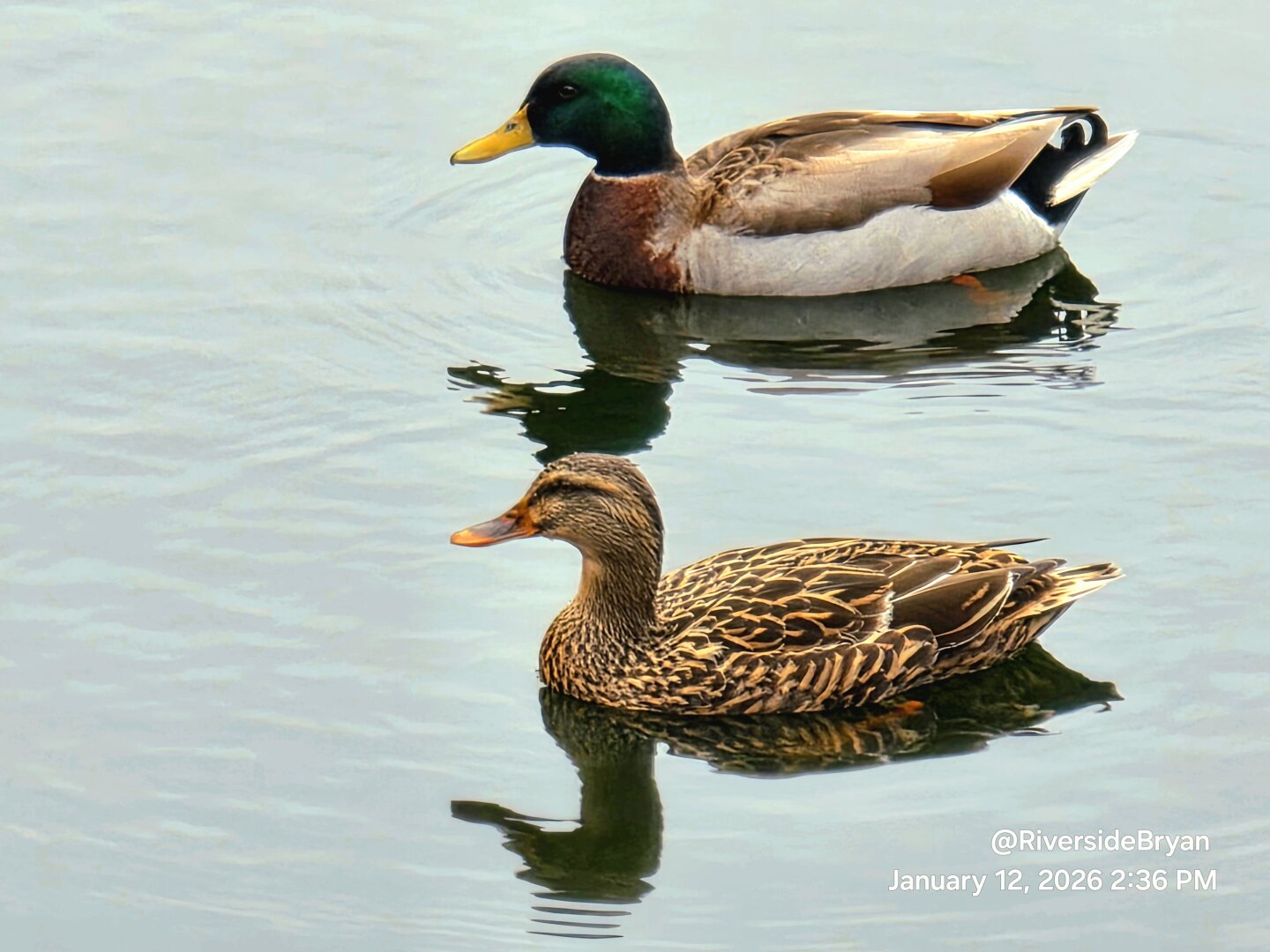
This image features a pair of mallard ducks (Anas platyrhynchos) swimming in calm water. The two ducks show the distinct differences between male and female mallards. The duck in the foreground is the female (hen), characterized by her mottled brown and tan plumage, which provides effective camouflage in natural environments. She has an orange and brown bill and a dark line through her eye. The duck in the background is the male (drake), notable for his striking, iridescent green head and a bright yellow bill. His body is mostly gray, with a chestnut-brown chest and a black rear section. Both male and female mallards possess a distinct, white-bordered, purple-blue wing patch called a speculum, which is visible even when they are resting on the water. These birds are a type of "dabbling duck," meaning they feed by tipping their bodies forward to graze on underwater plants and insects rather than fully diving underwater.
1
2