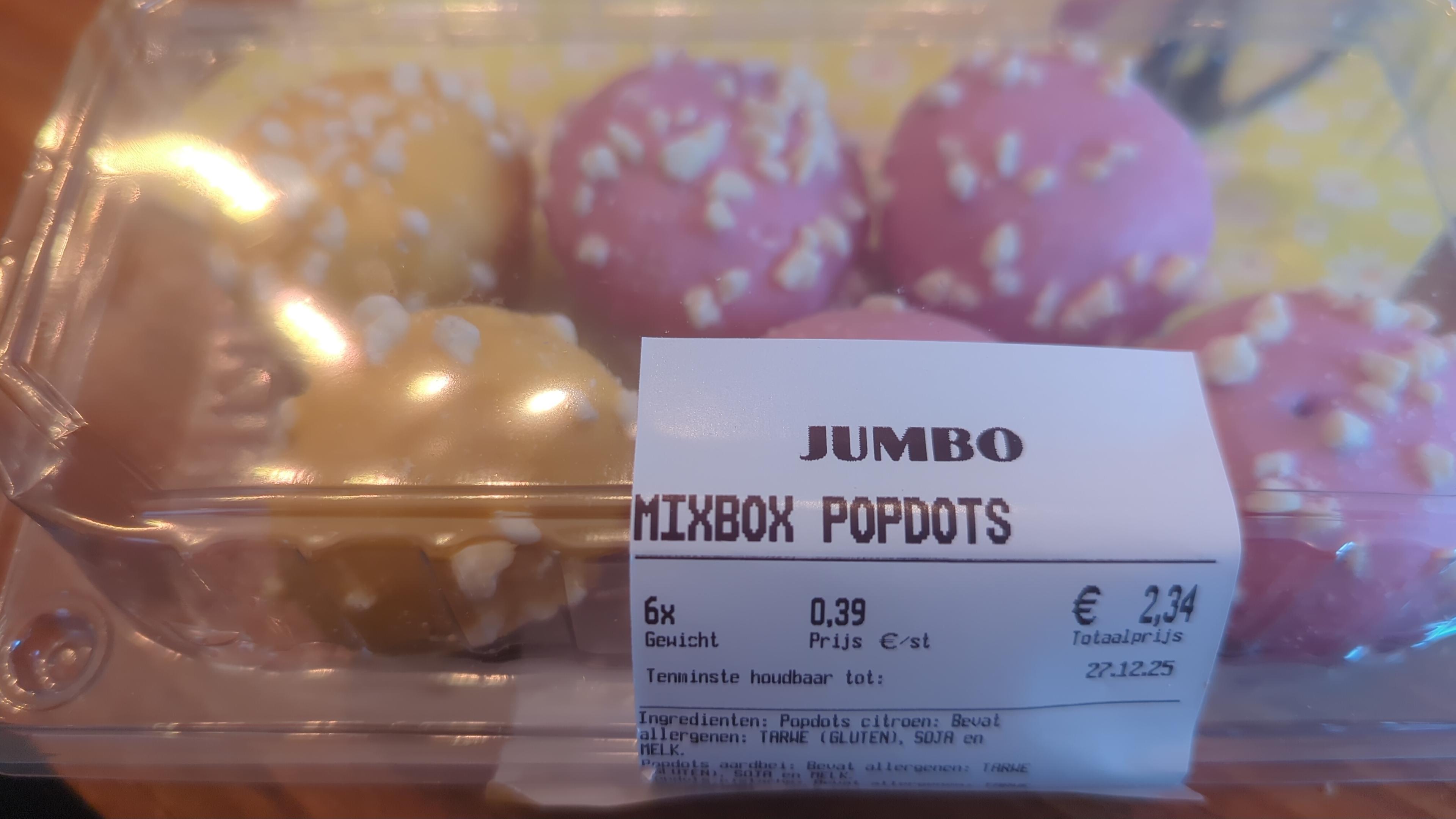
(if you're curious, the Dutch label on them says "mini berliner" as the product name and "mini beignet" in the ingredients)
2
(if you're curious, the Dutch label on them says "mini berliner" as the product name and "mini beignet" in the ingredients)
@0xabad1dea I was just as confused as your husband after reading that toot. This might help clear up the confusion for others: https://en.wikipedia.org/wiki/Donut_hole
@0xabad1dea I started a big controversy by calling oliebollen “swol donut holes”
(if you're curious, the Dutch label on them says "mini berliner" as the product name and "mini beignet" in the ingredients)
@0xabad1dea Jumbo calls them popdots. No idea why.
@0xabad1dea wait, Mini Berliner? Are they filled with jam?
@funkylab it had speculaas paste inside, yeah. I don't think anyone around here really sells donut holes without filling.
@0xabad1dea Hm, maybe there's quarkballen (or similar, this is vibe-based dutching), which are donut-hole-sized, fried in fat, quark-based dough balls. It'd be a bit surprising if there's not some small spherical plain dough deep-fried Dutch food… knowing the deep-fry shops that I used to visit across the border from Aachen.
@0xabad1dea ah yes, Oliebol.
@0xabad1dea yeah then the Berliner terminology makes sense. I'm not sure about the US English terminology for this stuff… In Germany¹ "Berliner" are ⌀10cm (near-spherical, non-toroidal) donut with a red fruit jelly filling (the most adventurous bakeries might offer vanilla custard filling).
—————
¹ Germany without:
- Berlin, where they're called Pfannkuchen, which have nothing to do with what Pfannkuchen/pancake/pannekoeken means anywhere else
- Bavaria, where the same is called Krapfen
@0xabad1dea the pastry made of negative-space
News and community around mavnn.eu projects.