Aha! 💡
Now I see what the number 13/19 being close to ln(3)/ln(5) does for us.
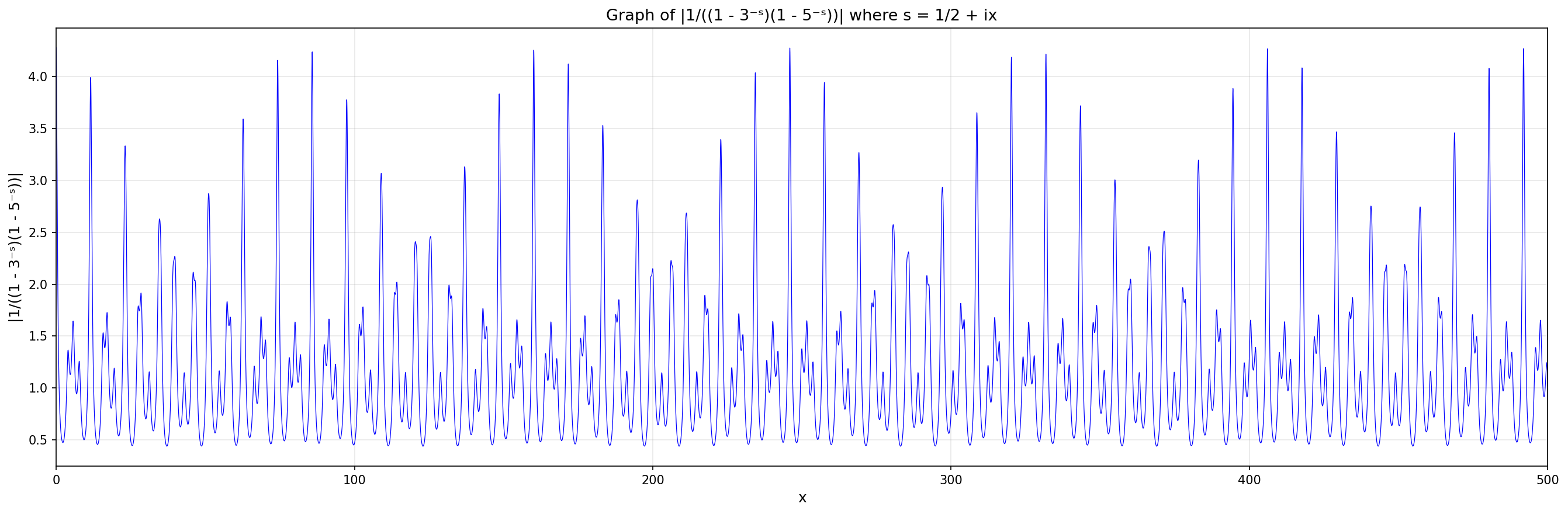
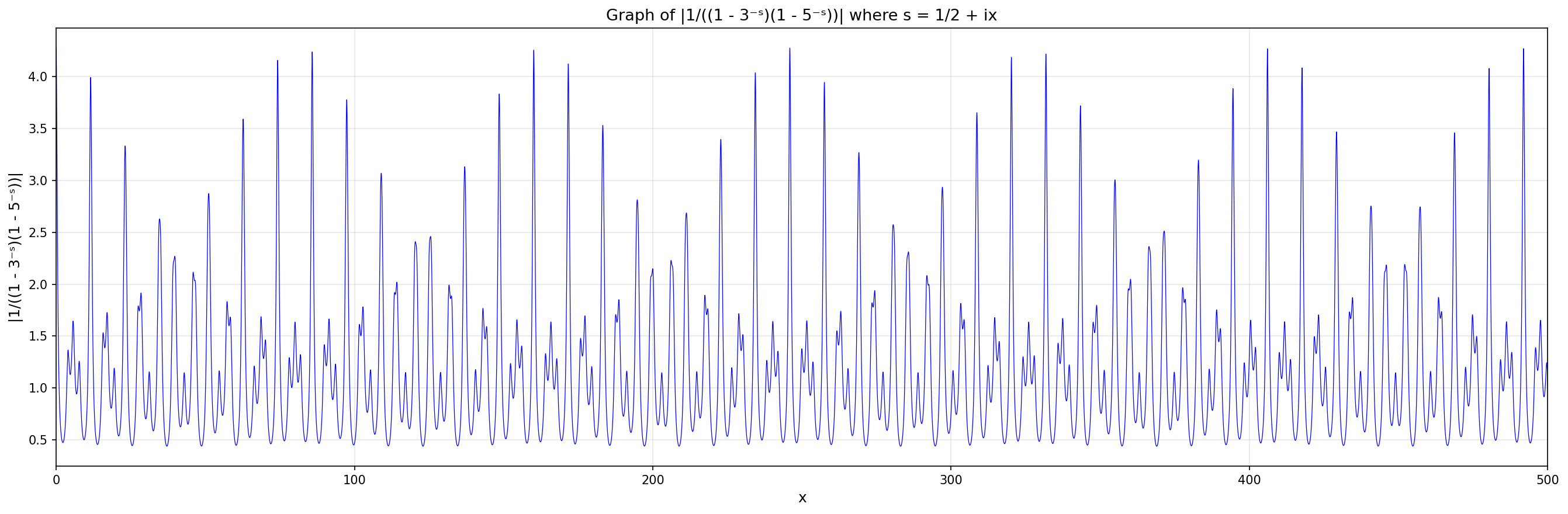
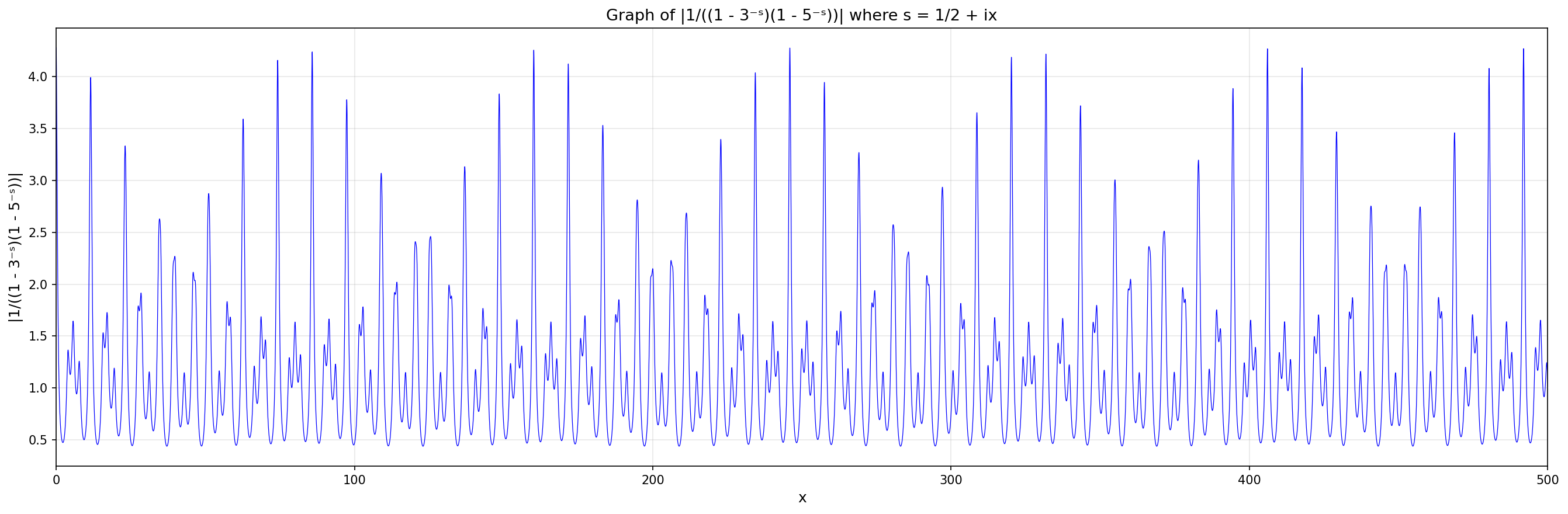
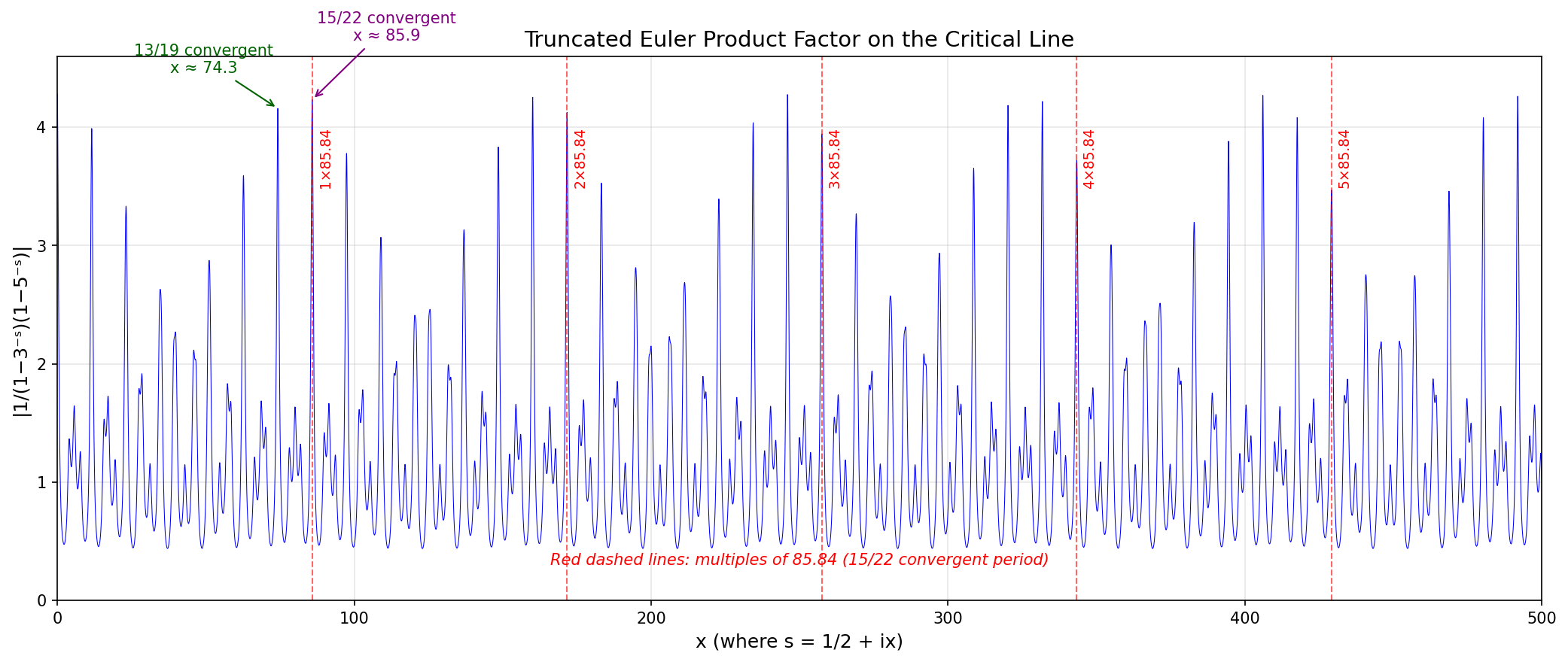
I said it predicts peaks in our zeta function spaced at a distance of roughly 74.3. And indeed, there are big peaks at x = 0 and x ≈ 74.3!
There's a bigger peak at x ≈ 85.84, since the number 15/22 is even closer to ln(3)/ln(5).
But I was wrong in suggesting that the period of the really big waves is 85.84! In fact the multiples of 85.84 drift away from crests of those waves.
But you'll notice they do lie on sharp spikes.
And this is only possible because
85.84 - 74.3 = 11.54
which is very close to the distance between the sharp spikes!!! Remember, I computed that distance approximately in part 4, that using the fact that 2/3 is another rational approximation to ln(3)/ln(5).
But where does the above equation come from? Is it a coincidence?
No, earlier in this thread we computed numbers 85.84, 74.3 and 11.54 approximately in two different ways. If we use one of these ways, 85.84 - 74.3 = 11.54 is telling us
15 × [2π/ln(3)] - 13 × [2π/ln(3)] = 2 × [2π/ln(3)]
If we use the other, it's telling us
22 × [2π/ln(5)] - 19 × [2π/ln(5)] = 3 × [2π/ln(5)]
Both of these are of course true!
So, something very nice is going on here. But I'm still confused about what.
(7/n)