Notes on gangster states
Why legitimacy matters when the state has a monopoly on coercive and lethal force
New, by me
Substack
https://emptycity.substack.com/p/notes-on-gangster-states
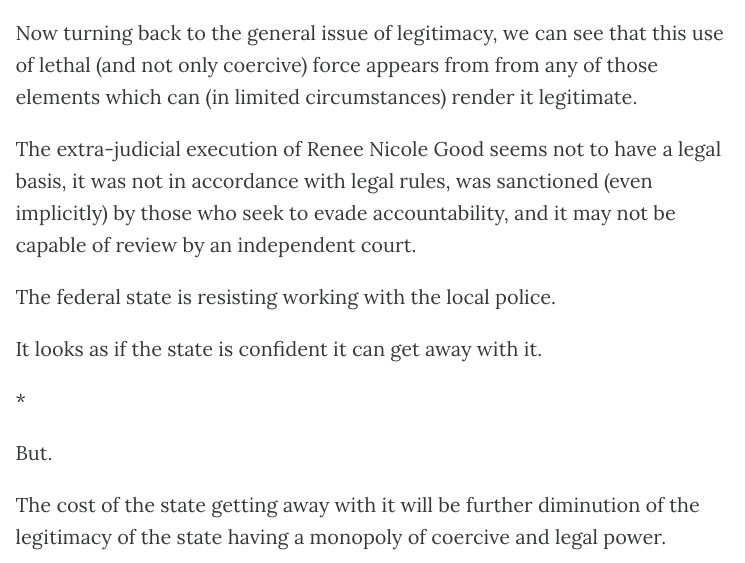
Lots of typos etc. Understandably.
Notes on gangster states
Why legitimacy matters when the state has a monopoly on coercive and lethal force
New, by me
Substack
https://emptycity.substack.com/p/notes-on-gangster-states
Lots of typos etc. Understandably.
typo of the day "curl --limit-rage ..."
@bagder feature request!
 Hello and a good meowing everyone!
 Have a most wonderful day and stay safe
  ♥️😸
♥️😸
@KimSJ @TheCybermatron @davidallengreen
A civil war is in many eays what the Trump regime is seeking to trigger. It gives them the excuse to use the full might of the US armed forces beyond the limited deployments so far. It gives them justifications for suspending elections, particularly in "blue" states.
I think they're deliberatley pushing for a state like Minnesota to deploy its national guard to defend citizens against ICE, after which they declare" insurrection"…
@a_cubed @KimSJ @TheCybermatron
Miller and other very much want to trigger the Insurrection Act
Notes on gangster states
Why legitimacy matters when the state has a monopoly on coercive and lethal force
New, by me
Substack
https://emptycity.substack.com/p/notes-on-gangster-states
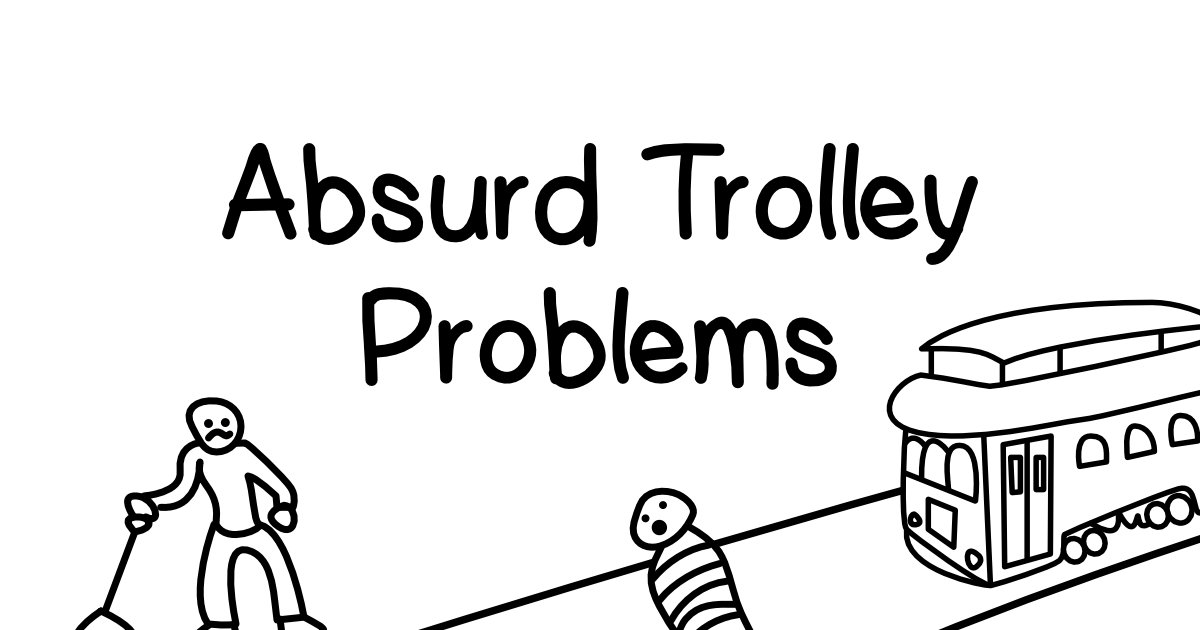
Are you evil? Test your level of evilness (evility? evilosity?) with these absurd trolly problems https://neal.fun/absurd-trolley-problems/
@brucelawson 59 hypothetical deaths, and solved philosophy.
Not bad for a monday morning.
The Rust 2026 Wasm Component project goal got merged!
This happened last week, but I forgot to share it here. It includes exciting stuff, like 3 new compiler targets and experimentation with `async fn main`!
Back home, just to be sure, let's take some tyrosijne to prevent any crashes.
Around one in eight beds in NHS hospitals in England are occupied by patients cleared for discharge but delayed from leaving hospital for a range of reasons from a lack of social care (packages) to family members worried about their ability to care for recuperating patients at home.... and, as we know, this presents a problem for the entire health care system.
The solution is investment in the NHS, in social care & in home support! Its not rocket science!
#NHS #health
https://www.bbc.co.uk/news/articles/c394vjm7n4vo
@ChrisMayLA6 yes. This has been a problem for twenty years to my knowledge. People who are fit for discharge but who can't be, often because there simply is no support network for them.

Can someone please explain #solarpunk to me?
@ryanc it's alt history cyberpunk the day after the oppressive regime is defeated, and it started this morning or anywhen else.
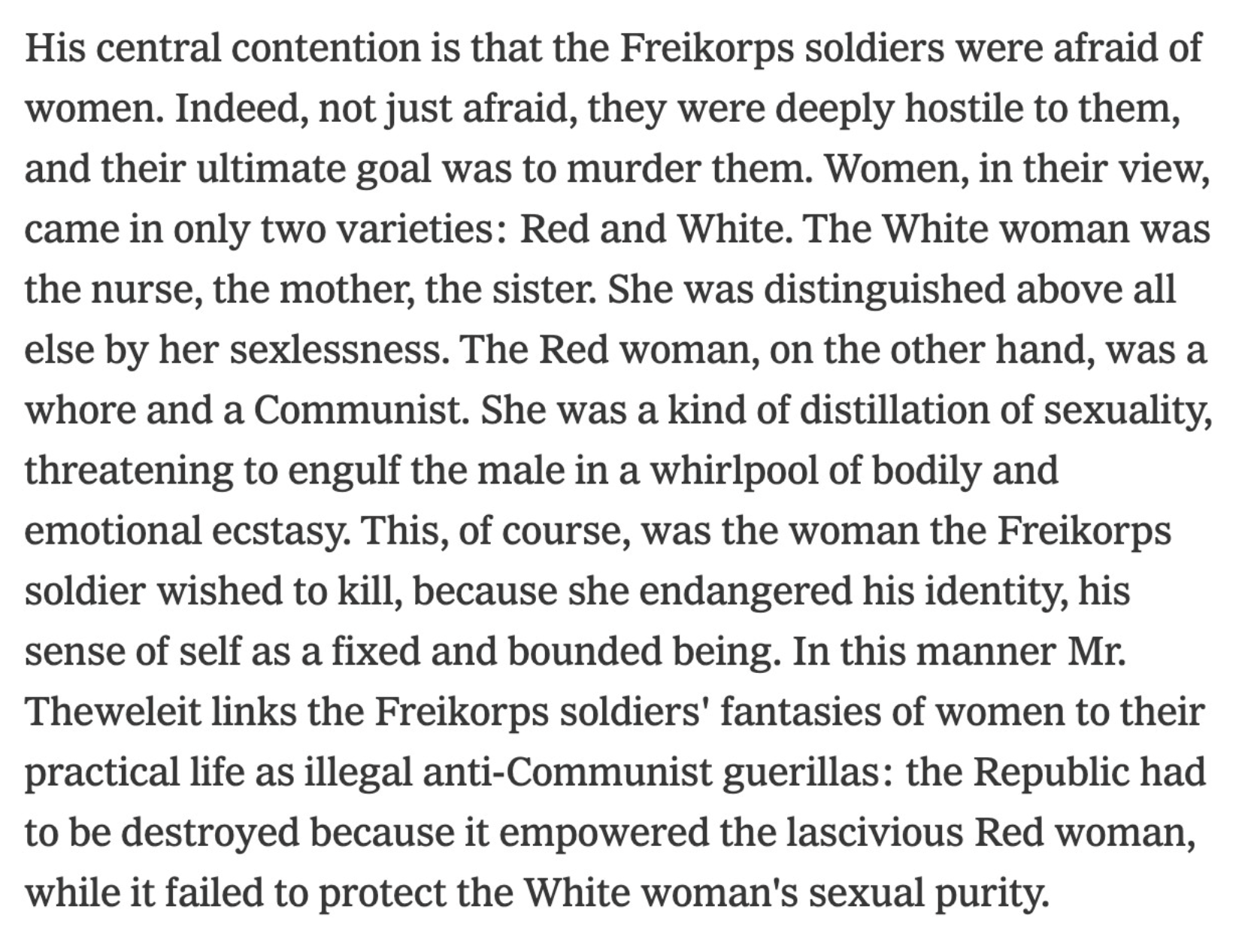
Interesting 1987 NYT book review of Klaus Theweleit's *Male Fantasies* "a study of the imaginative world of the German Freikorps movement."
https://www.nytimes.com/1987/06/21/books/the-women-they-feared.html
@Mer__edith As a manliest man in the manverse, I don't mind getting engulfed in pussy. What are those men? Gay or what?
Mark Ruffalo easily won the night —
Ruffalo: I got to be honest with you. I’m not feeling so great. We have a woman, Renee Good was murdered in our streets of America. We got storm troopers running around, terrorizing. And as much as I love all this, I don’t know if I can pretend like this crazy stuff isn’t happening.
#GoldenGlobes
@markruffalo: We have a president who says the laws of the world don’t apply to him. And we can rely on his morality. But he has no morality. So, I love being here. But it’s so hard to pretend anymore. This is crazy, what’s happening.
Mark Ruffalo easily won the night —
Ruffalo: I got to be honest with you. I’m not feeling so great. We have a woman, Renee Good was murdered in our streets of America. We got storm troopers running around, terrorizing. And as much as I love all this, I don’t know if I can pretend like this crazy stuff isn’t happening.
#GoldenGlobes
@markruffalo: We have a president who says the laws of the world don’t apply to him. And we can rely on his morality. But he has no morality. So, I love being here. But it’s so hard to pretend anymore. This is crazy, what’s happening.
Mark Ruffalo easily won the night —
Ruffalo: I got to be honest with you. I’m not feeling so great. We have a woman, Renee Good was murdered in our streets of America. We got storm troopers running around, terrorizing. And as much as I love all this, I don’t know if I can pretend like this crazy stuff isn’t happening.
#GoldenGlobes
As more ICE & Federal agents arrive in Minnesota, from this side of the Atlantic, it looks almost as if the Court of the Tangerine Tyrant is trying to provoke a (localised?) civil war... what could be the motive?
Declaration of a state of emergency & the suspension of the mid-term elections perhaps?
More distraction from the Epstein Files (lack of) release(s)?
Or both?
Or something else?
@ChrisMayLA6 Also, it is a ploy to divide people. Always good for usurpers.
Still walking home.
Missing the gym makes my day a mess because I'm accustomed to use it to organise the rest of the day between series. Movement empowers focus.
Today that I'm feeling in this weird in between status of having the perks of unmedicated while the perks of medicated I can see it.
Yet because I have now the knowledge that even though it feels easy I shouldn't hold a TODO lista on my mind, I'm instead assuming moments in a calendar. With this, trying to naturally learn to avoid the afternoon exhaustion and onset of the bad parts of ADHD.
@actuallyadhd the key word to pat attention here is "movement helps me focus".
I'm starting to wonder about a standing desk.
Still walking home.
Missing the gym makes my day a mess because I'm accustomed to use it to organise the rest of the day between series. Movement empowers focus.
Today that I'm feeling in this weird in between status of having the perks of unmedicated while the perks of medicated I can see it.
Yet because I have now the knowledge that even though it feels easy I shouldn't hold a TODO lista on my mind, I'm instead assuming moments in a calendar. With this, trying to naturally learn to avoid the afternoon exhaustion and onset of the bad parts of ADHD.
@leeg Yes, I was being too cutesy in considering clicking on ads part of the work (doomscrolling?) that’s being done by people of a particular class in order to allow the owners of the means of advertising to capture surplus value.
@marick that seems like a good future topic for a podcast I listen to and highly rate, where the presenter investigates ideas from outside software engineering :D